
Analysis of P2P Trade Freeze Triggers and Risk Mitigation Procedures
Status: Published: Last reviewed: Editorial policy
P2P crypto trades trigger a freeze when the counterparty, or the money they sent, ties to fraud or other flagged activity. The control then sits with the bank or exchange: it holds the account while its check runs. Receiving flagged funds is possible without any fault on your side. The output that most often unlocks the hold is a clean record: the trade itself, the counterparty, and the origin of your funds.
Need a case detail checked? Send it here:
Conditions Under Which Legitimate Trades Result in Fund Freezes
In a peer to peer trade, you exchange crypto for money, or money for crypto, with another private person. The visible input is a username only. The money itself moves through a bank or payment app outside your control, and that system holds the actual payment record.
If the counterparty utilizes funds from a flagged source, such as a scam or disputed transfer, the originating bank may impose a hold. This constraint is transferrable, impacting subsequent accounts and funds.
Actors Involved in Fund Freezing Operations
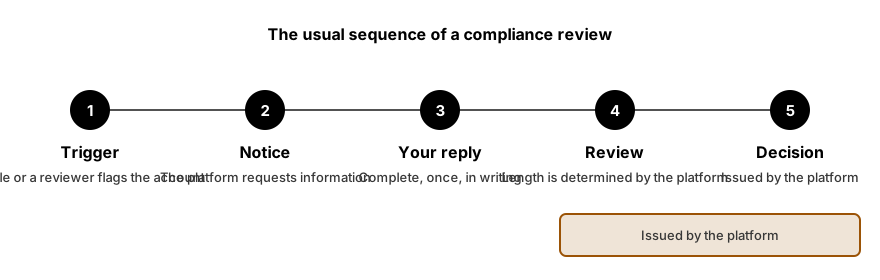
Multiple external parties possess the ability to restrict access to funds. Each entity applies specific operational policies that dictate these restrictions.
- Your bank or payment provider: it can hold an incoming payment or shut the account after a complaint.
- If the counterparty's bank sends a recall or a fraud report, your bank may receive it and freeze your funds.
- The P2P platform. It can freeze the order, the listing and the wallet during a dispute review.
- The exchange that receives the crypto. It can restrict an account after a risk flag.
- Law enforcement, if a victim's complaint covers the funds.
What a freeze looks like
One common trigger: a bank account gets restricted after repeated incoming payments from different senders. The bank then asks about the purpose of each payment and your relationship with each sender.
Another pattern: a P2P platform holds the crypto in escrow after one side opens a dispute. Funds can stay locked until the platform rules, and it may not disclose detailed reasons.
How to document a legitimate trade
A complete file makes the review easier. Save records at trade time, not weeks later.
- The P2P order page or chat log, showing price, amount, timestamp and the counterparty's username.
- The matching bank statement line from the trade, with the payer's name printed exactly as shown.
- The exchange or wallet transaction record showing crypto arriving or leaving.
- Your identity document, plus evidence that the payment originated from an account held in the counterparty's own name.
- Proof of the origin of your own funds or crypto before the trade, for example earlier statements or receipts.
How to reduce the risk next time
Choose platforms that run escrow and identity checks, and deal only with counterparties holding a verified history. Accept payment solely from an account in the buyer's own name; never take payments from third parties.
Keep trade sizes modest and consistent with your profile. Do not split large amounts into many small ones; that pattern attracts attention. Never give a counterparty your seed phrase, private keys or banking passwords, and never shift trade chats to unofficial channels.
Where we can help
If P2P trades end with your funds frozen, we assess your case free of charge. We help you collect the records, draft a clear account of each trade and prepare the response for the bank, platform or exchange. Where a legal route exists, independent licensed lawyers are brought in.
The release decision sits with the bank or platform, and our service cannot force it. We never ask for a seed phrase, private key or password.
Frequently asked questions
Can funds I received through a P2P trade be lost?
Yes, that outcome is possible. If a payment you received is later linked to fraud, the bank can recall or hold the funds, even when you had no knowledge of the fraud. Complete records and a clean trade history are the evidence that shows good faith.
After P2P payments, why would my bank block my account?
Banks monitor accounts for many incoming payments from unrelated senders, or payments tied to a fraud complaint. The account is restricted while the bank asks you to state what the payments were for. A written explanation supported by proof is the normal route to release.
Is P2P trading against the law?
No. P2P trading is legal in many jurisdictions, but the rules vary by country and by platform. Check the local rules and your platform's terms, and keep records so each trade can be explained if asked.
If a P2P platform has frozen your crypto, what should you do?
Open a ticket in the platform's official channel, submit the order reference and the proof of payment, and retain every reply. If the first answer is unclear, escalate through the platform's appeals process.
How we can help
- P2P frozen funds: intake and appeals. Bank or exchange hold after P2P trading: assemble proof of the trade and appeal.
- Sourcing of funds and wealth: document packs. Build a clear source of funds and source of wealth pack for exchanges, banks and processors.
- Blocked crypto cards and payment accounts. Crypto card or processor account blocked: locate the trigger, record it, then file an appeal.
- Diagnosing a crypto freeze. Identify the party behind a freeze and the realistic next step.
The content on this page is general. It is not legal advice.