
How crypto cards and neobank accounts end up blocked, and the steps to take next
Status: Published: Last reviewed: Editorial policy
Verdict first: a block on a crypto card or neobank account usually comes from an automated risk rule, not from a person. The trigger can be unclear source of funds, spending in high-risk merchant categories, fast top-ups, details that conflict with your KYC record, or activity from a restricted region. Then the consequence: the account freezes. The action: answer the provider's request in full, attach documents, and send it through the official channel. A complaint alone rarely changes the state.
Need a case detail checked? Send it here:
Why crypto cards get blocked: two rule sets control the same card
A crypto card sits on top of three parties: a card network, a bank or e-money issuer (the regulated holder of your funds), and a crypto service. Every party runs its own compliance checks. A block can be triggered by any one of them, so the cause is not always visible from your side.
Consequence: the card can stop working while the app still looks normal. A partner you never dealt with directly may have made the decision, and the support agent you reach may not see the reason.
The usual reasons for a block
Treat this list as patterns, not as a diagnosis. The notice you get may state only that your account is under review.
- Source of funds: the provider has no record showing where the money loaded onto the card originated.
- High-risk merchant category: purchases at gambling, forex, crypto or comparable merchants can trigger additional checks.
- Rapid top-ups: large loads followed by immediate spending do not match a typical usage profile.
- KYC mismatch: the stored profile data, meaning name, address, or date of birth, does not match the documents on record, or a document has passed its expiry date.
- Region: card use in a country the provider does not cover, or a login from a location inconsistent with the registered address.
- Third-party funds: money received from another person or routed through peer-to-peer transfers.
What the check is really testing
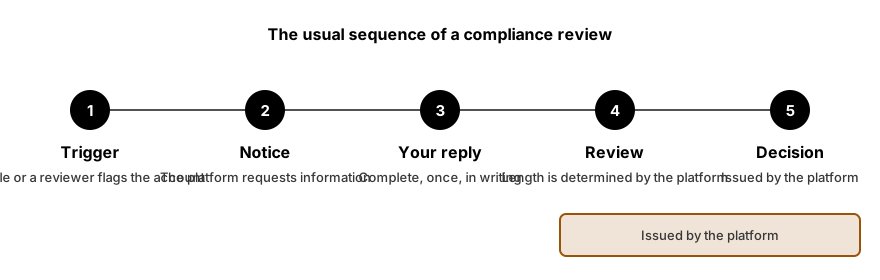
A block message usually hides a request, even when worded poorly. Identify three items: what is asked, the deadline, and the required channel. Proof of address and proof of source of funds are different outputs.
If the wording is vague, send back a single precise question: which document or input will close the review. Keep the reply in writing.
First steps after the block
Deliver one full answer rather than several partial replies. Fragmented responses slow the review.
- Do not open another account or shift the balance elsewhere to sidestep the review.
- Gather evidence showing the funding path: exports from the exchange, statements from your bank, receipts for purchases and the wallet's transaction history.
- Open the app and confirm the name and address on file are identical to what your identity document shows.
- Send one reply through the official channel, then record the ticket number.
- Never give anyone who offers help your seed phrase, private keys, card PIN or password.
When a block becomes a closure
Some providers respond to a block by closing the account instead of lifting it. In that state they may send the balance to a bank account or wallet you can prove you own, or keep it held until the review concludes.
If weeks pass without a provider response, or the balance is large, structured support helps. We organise your documents, identify what the provider is asking for and draft the reply. The provider holds the decision, and a release cannot be forced by us.
Frequently asked questions
Why did my crypto card get blocked with no warning?
Automated rules usually trigger before any message is sent. The system may have matched a deposit, a merchant category or a location change against its filters, and the account state stays frozen until a human reviewer decides. A notice may follow afterward.
Does a blocked card still let me spend the balance?
A block typically applies to all card functions. If the card is blocked, spending and withdrawals are both prevented. Confirm with the provider if the balance can be sent to a verified bank account or wallet during the review.
Is opening a new card with a different provider a useful step?
Moving funds during a review usually triggers more suspicion, not less. The check reads a fast transfer as possible avoidance. Respond to the provider's first request, wait for the account to clear, then decide how to handle the balance.
What documents do card providers typically request?
The required documents for verification include an identity document, proof of address, bank statements, and evidence of crypto origin such as exchange records or purchase receipts. The exact set of documents depends on the card provider and the specific flag that triggered the block.
How we can help
- Blocked crypto cards and payment accounts. Crypto card or processor account blocked: locate the trigger, record it, then file an appeal.
- Sourcing of funds and wealth: document packs. Build a clear source of funds and source of wealth pack for exchanges, banks and processors.
- Procedure for Account Termination and Offboarding Management. Received a closure notice while your balance is still in? We draft written requests and escalate.
- Diagnosing a crypto freeze. Identify the party behind a freeze and the realistic next step.
The content on this page is general. It is not legal advice.